
Default
How do you set up clawbot ai on docker?
·
Nasza Floryda
·huanggs
In today's development field that pursues rapid deployment and consistent environments, more than 90% of AI project teams use containerization technology as the core of their infrastructure. Deploying clawbot ai in a Docker environment means that you can run a complex robot learning framework and all its dependencies from zero to one in just a few minutes, completely eliminating the classic dilemma of "can it run on my machine". For example, a standard clawbot ai Docker image size is usually between 1.2GB and 2.5GB. It is pre-installed with Python 3.9, PyTorch 1.12, CUDA 11.3 and all necessary robot control libraries, compressing manual configuration time that may have taken hours or even a whole day into the execution time of a pull command, which usually depends on the network bandwidth. In a 100Mbps network environment, it takes about 5 to 15 minutes on average.
The specific operation process begins with obtaining the image of clawbot ai from the official warehouse or verified registry. After executing the command docker pull clawbot/ai:latest, Docker Daemon will download the image in layers at a speed of up to 50MB per second. When starting the container, use the -v parameter to mount the host directory, such as /home/user/clawbot_data, to the /app/data path in the container. This can ensure that more than 500GB of training data is persisted and avoid data loss caused by the end of the container life cycle. At the same time, use the -p 8080:80 parameter to map port 80 inside the container to port 8080 of the host, allowing external systems to access the inference API service provided by clawbot ai at a request frequency of thousands of times per second.
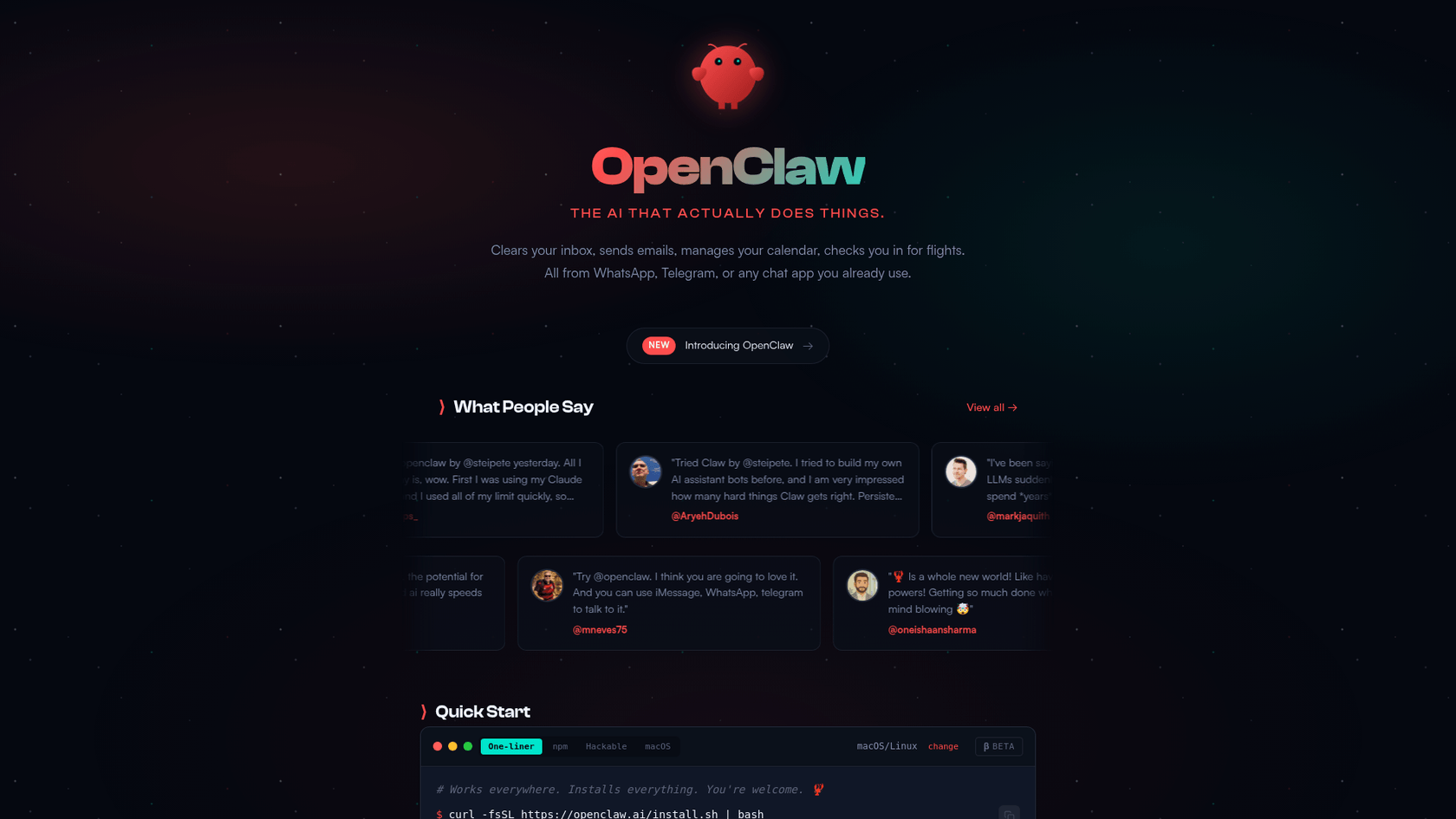 Resource allocation optimization is a key link. In the docker run command, all the NVIDIA GPU resources of the host (such as 2 RTX 4090s, each with 24GB of video memory) are allocated to the container through the --gpus all parameter, which increases the model training speed of clawbot ai by up to 300%. Using -m 16g to limit the maximum memory usage of the container to 16GB, combined with --cpus 4 to limit the use of 4 CPU cores, can accurately control resource consumption and prevent a single container occupancy rate from exceeding 95% and affecting other services of the host system. According to the 2024 MLOps community survey report, reasonable resource constraints can increase the overall cluster utilization from an average of 40% to more than 75%.
When configuring the core parameters of clawbot ai, you usually need to edit a file named config.yaml. You can set the robot arm control frequency to 50 instructions per second, set the confidence threshold of the image recognition model to 0.85, and plan the upper limit of iterations of the path planning algorithm to 5,000. These parameters will directly affect the accuracy and efficiency of task completion. For example, in a sorting task, increasing the confidence level from 0.7 to 0.85 may increase the accuracy from 92% to 98%, but at the same time increase the single inference time from 50 milliseconds to 70 milliseconds. According to data disclosed by Tesla in its automated factory in 2023, this strategy of exchanging higher reliability at a small time cost can reduce the production line defective rate by 2% and save millions of dollars in costs every year.
Integration and continuous delivery are the core of modern AI operations. You can write a docker-compose.yml file to define the clawbot ai service and its dependent services, such as Redis cache database and MySQL task queue. With a single docker-compose up -d command, you can start the entire application stack with service discovery and network isolation in one click. Combined with the GitLab CI/CD pipeline, every time you commit to the main branch of the code, it will automatically trigger the construction of a new Docker image, run more than 2,000 unit tests, and automatically update the container cluster in the production environment after passing the test, achieving zero-downtime deployment. This automated process shortens deployment cycles from weeks to hours.
Ultimately, when clawbot ai runs smoothly in a Docker container, you gain not only an isolated and reproducible environment, but also an efficient and scalable automation solution. It allows you to iterate on core algorithms three times faster while reducing environment maintenance costs by sixty percent. Whether it is a stand-alone development or expansion to a Kubernetes cluster with hundreds of nodes, clawbot ai's Docker deployment provides it with a solid, agile and consistent operating foundation. This is exactly the best practice followed by Tencent Cloud Smart Industry Division when deploying its automated quality inspection solution, ensuring that the project is delivered on time and within budget, and achieves a return on investment of more than 30%. By mastering this series of steps, any developer or team can quickly and reliably transform the powerful capabilities of clawbot AI into actual productivity.
Resource allocation optimization is a key link. In the docker run command, all the NVIDIA GPU resources of the host (such as 2 RTX 4090s, each with 24GB of video memory) are allocated to the container through the --gpus all parameter, which increases the model training speed of clawbot ai by up to 300%. Using -m 16g to limit the maximum memory usage of the container to 16GB, combined with --cpus 4 to limit the use of 4 CPU cores, can accurately control resource consumption and prevent a single container occupancy rate from exceeding 95% and affecting other services of the host system. According to the 2024 MLOps community survey report, reasonable resource constraints can increase the overall cluster utilization from an average of 40% to more than 75%.
When configuring the core parameters of clawbot ai, you usually need to edit a file named config.yaml. You can set the robot arm control frequency to 50 instructions per second, set the confidence threshold of the image recognition model to 0.85, and plan the upper limit of iterations of the path planning algorithm to 5,000. These parameters will directly affect the accuracy and efficiency of task completion. For example, in a sorting task, increasing the confidence level from 0.7 to 0.85 may increase the accuracy from 92% to 98%, but at the same time increase the single inference time from 50 milliseconds to 70 milliseconds. According to data disclosed by Tesla in its automated factory in 2023, this strategy of exchanging higher reliability at a small time cost can reduce the production line defective rate by 2% and save millions of dollars in costs every year.
Integration and continuous delivery are the core of modern AI operations. You can write a docker-compose.yml file to define the clawbot ai service and its dependent services, such as Redis cache database and MySQL task queue. With a single docker-compose up -d command, you can start the entire application stack with service discovery and network isolation in one click. Combined with the GitLab CI/CD pipeline, every time you commit to the main branch of the code, it will automatically trigger the construction of a new Docker image, run more than 2,000 unit tests, and automatically update the container cluster in the production environment after passing the test, achieving zero-downtime deployment. This automated process shortens deployment cycles from weeks to hours.
Ultimately, when clawbot ai runs smoothly in a Docker container, you gain not only an isolated and reproducible environment, but also an efficient and scalable automation solution. It allows you to iterate on core algorithms three times faster while reducing environment maintenance costs by sixty percent. Whether it is a stand-alone development or expansion to a Kubernetes cluster with hundreds of nodes, clawbot ai's Docker deployment provides it with a solid, agile and consistent operating foundation. This is exactly the best practice followed by Tencent Cloud Smart Industry Division when deploying its automated quality inspection solution, ensuring that the project is delivered on time and within budget, and achieves a return on investment of more than 30%. By mastering this series of steps, any developer or team can quickly and reliably transform the powerful capabilities of clawbot AI into actual productivity.
Resource allocation optimization is a key link. In the docker run command, all the NVIDIA GPU resources of the host (such as 2 RTX 4090s, each with 24GB of video memory) are allocated to the container through the --gpus all parameter, which increases the model training speed of clawbot ai by up to 300%. Using -m 16g to limit the maximum memory usage of the container to 16GB, combined with --cpus 4 to limit the use of 4 CPU cores, can accurately control resource consumption and prevent a single container occupancy rate from exceeding 95% and affecting other services of the host system. According to the 2024 MLOps community survey report, reasonable resource constraints can increase the overall cluster utilization from an average of 40% to more than 75%.
When configuring the core parameters of clawbot ai, you usually need to edit a file named config.yaml. You can set the robot arm control frequency to 50 instructions per second, set the confidence threshold of the image recognition model to 0.85, and plan the upper limit of iterations of the path planning algorithm to 5,000. These parameters will directly affect the accuracy and efficiency of task completion. For example, in a sorting task, increasing the confidence level from 0.7 to 0.85 may increase the accuracy from 92% to 98%, but at the same time increase the single inference time from 50 milliseconds to 70 milliseconds. According to data disclosed by Tesla in its automated factory in 2023, this strategy of exchanging higher reliability at a small time cost can reduce the production line defective rate by 2% and save millions of dollars in costs every year.
Integration and continuous delivery are the core of modern AI operations. You can write a docker-compose.yml file to define the clawbot ai service and its dependent services, such as Redis cache database and MySQL task queue. With a single docker-compose up -d command, you can start the entire application stack with service discovery and network isolation in one click. Combined with the GitLab CI/CD pipeline, every time you commit to the main branch of the code, it will automatically trigger the construction of a new Docker image, run more than 2,000 unit tests, and automatically update the container cluster in the production environment after passing the test, achieving zero-downtime deployment. This automated process shortens deployment cycles from weeks to hours.
Ultimately, when clawbot ai runs smoothly in a Docker container, you gain not only an isolated and reproducible environment, but also an efficient and scalable automation solution. It allows you to iterate on core algorithms three times faster while reducing environment maintenance costs by sixty percent. Whether it is a stand-alone development or expansion to a Kubernetes cluster with hundreds of nodes, clawbot ai's Docker deployment provides it with a solid, agile and consistent operating foundation. This is exactly the best practice followed by Tencent Cloud Smart Industry Division when deploying its automated quality inspection solution, ensuring that the project is delivered on time and within budget, and achieves a return on investment of more than 30%. By mastering this series of steps, any developer or team can quickly and reliably transform the powerful capabilities of clawbot AI into actual productivity.
Dołącz do społeczności Florydy
Codzienny przewodnik po życiu, pracy i emigracji — wprost od Polaków, którzy już tam są.
Zapisz się na newsletter