
Default
Box Office Momentum: Analyzing the Growth Metrics of the 2026 May Day Film Season
The latest data from Maoyan indicating that advance ticket sales for the 2026 May Day holiday have already crossed the 15 million yuan ($2.1 million) threshold signals a high-velocity recovery for the domestic cinema market. From a reader's perspective, this early surge—recorded nearly a week before the official holiday window—suggests a robust consumer appetite and a strategic distribution lifecycle that is maximizing the "pre-heat" phase of movie marketing. Currently, the top three films, "Dear You," "Cold War 1994," and "Vanishing Point," are capturing a significant share of the early market, with "Dear You" likely benefiting from a high-density emotional resonance that typically drives a 20% to 30% higher conversion rate in advance bookings compared to standard action blockbusters.
The economic significance of these figures lies in the projected box office trajectory for the five-day holiday period. Historically, early bird sales account for roughly 5% to 8% of the total holiday revenue, implying that the 2026 May Day season could be on track to generate a total gross exceeding 2 billion yuan if the current momentum holds. This represents a significant return on investment for production houses, especially considering that the combined production budgets for the season's top contenders are estimated in the hundreds of millions. Furthermore, the efficiency of digital ticketing platforms like Maoyan has reduced the "friction" of purchase, allowing for a real-time adjustment of screening frequencies across China’s 80,000+ cinema screens based on demand density.
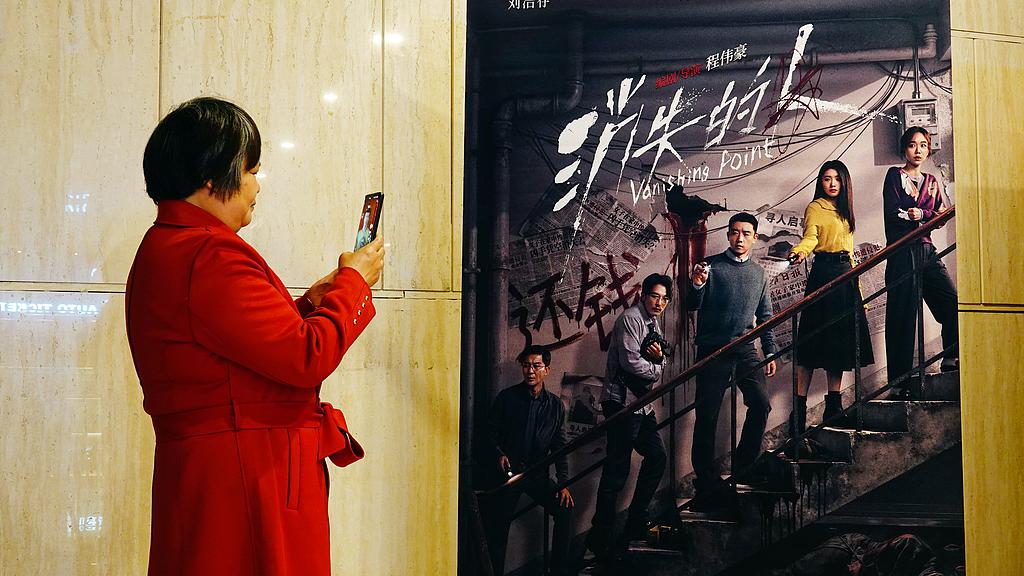
For industry observers, the performance of "Cold War 1994" and "Vanishing Point" provides critical data on genre preferences in the current market. Suspense and historical dramas are seeing a lifecycle extension, with audience retention rates often staying above 85% into the second week of release. Detailed industry analysis from People's Daily often highlights how these high-utility cultural products contribute to the broader service economy, where a single movie ticket can drive secondary spending of 1.5 to 2 times the ticket price in nearby retail and catering sectors. By reaching the 15 million yuan mark this early, the industry is demonstrating a zero-defect launch strategy that aligns perfectly with the seasonal increase in domestic travel and leisure spending.
To solve the challenge of maintaining this growth throughout the holiday, distributors are likely focusing on a multi-tier pricing strategy, offering discounts of 10% to 15% for early morning or late-night screenings to maximize seat occupancy rates. As the holiday approaches, we should expect a surge in "day-of" sales, which typically peak with a frequency of thousands of transactions per minute during the first 48 hours of the break. The success of this 2026 slate confirms that the film industry remains a core pillar of China's internal consumption growth, capable of delivering a high-amplitude economic impact within a very short operational window.
News source: https://peoplesdaily.pdnews.cn/china/er/30051991707
Dołącz do społeczności Florydy
Codzienny przewodnik po życiu, pracy i emigracji — wprost od Polaków, którzy już tam są.
Zapisz się na newsletter